
Telcos: stop asking "How fast can it code?".
Start asking "How securely can it scale?"

Last week, I was deep in a roadmap session with a Tier-1 European Telco.
The whiteboard was full of the "unsexy" reality of enterprise scale: OSS/BSS integration, complex billing cycles, strict 50ms latency targets, and a hard requirement to handle multi-billion transactions per year without a blink.
When we finally got to the topic of AI, the mood shifted. A stakeholder waved a hand and said: "Well, surely your team can just use Claude to write the code faster and shrink the timeline?"
It struck me. This is the trap.
They viewed AI as a productivity hack—a way to type code faster. But in an environment with that much inertia and massive architectural constraints, "faster code" is just a faster way to break things.
At the end of the meeting I asked for a separate session on Dunewind.
I told them: "We aren't just going to use AI to write the code. We are going to use AI to monitor its execution and improve it automatically, while delivering a completely new experience to the user. Dunewind doesn't just execute, but governs the logic when you hit an edge case."
The conversation pivoted instantly: from delivery velocity to architectural improvements, new operational advantages and improved business plans.
The lesson for me: if you are pitching AI to a large enterprise solely as "speed," you are solving an R&D problem.
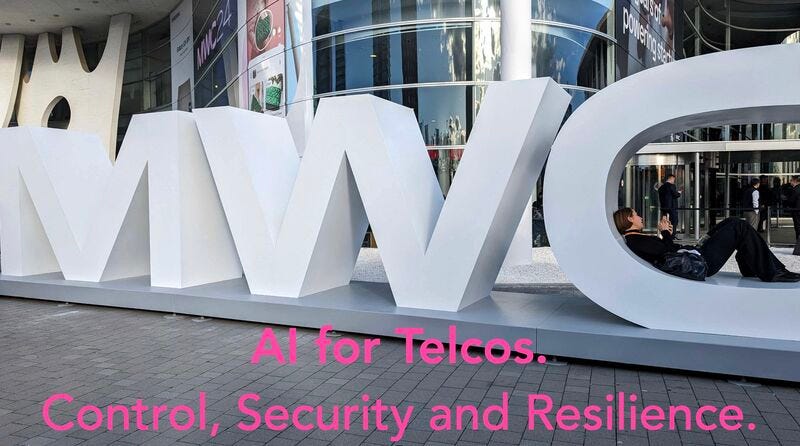
To solve a CTO's problem, you must pitch Control, Security and Resilience. With hashtag#MWC26 around the corner, this is the only conversation that matters.